America’s fascination with charismatic figures selling simple solutions is deeply rooted in its history and psyche. From 19th-century medicine shows like Clark Stanley’s rattlesnake demonstration to modern political rallies, spectacle and storytelling have been powerful tools for persuasion—often blurring truth and deception. These leaders tap into universal desires for clarity, control, and hope, transforming complex issues into emotionally charged narratives that forge strong bonds with supporters. Today’s figures, exemplified by Donald Trump, continue this tradition, using visual flair and emotive slogans to dominate media and rally support. But this reliance on spectacle risks undermining democratic substance, fostering polarization, misinformation, and short-term thinking. Is our collective love for quick fixes and charismatic personalities a reflection of genuine need or a dangerous trap that weakens societal cohesion? Recognizing the roots and implications of spectacle-driven persuasion is essential to nurturing a resilient democracy capable of facing genuine challenges with critical thinking and authentic solutions.
Table of Contents
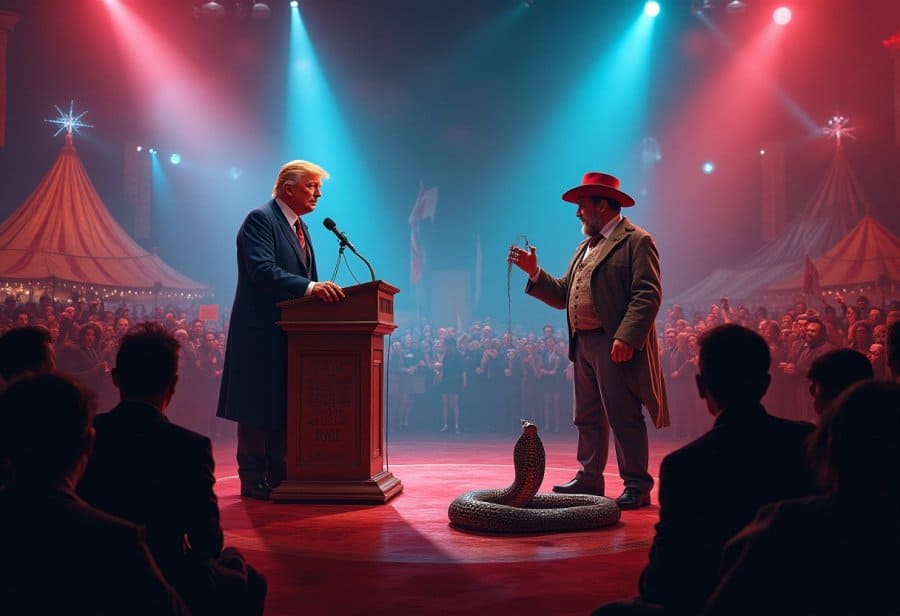
America’s Fascination with Charismatic Leaders and the Allure of Quick Fixes
America’s fascination with charismatic figures who promise simple solutions to complex problems isn’t a new phenomenon; it’s woven into the fabric of the nation’s history. From the earliest political rallies to modern social media campaigns, Americans have long been drawn to personalities who entertain, inspire, and offer hope through bold, memorable messages. These figures tap into a universal desire for clarity and certainty, especially during times of upheaval or uncertainty when complicated issues seem overwhelming and hard to navigate.
This pattern isn’t accidental. It reveals a deeper psychological and cultural tendency to seek quick fixes and easy answers. When life feels unpredictable—whether due to economic worries, social unrest, or health crises—people often prefer promises that are straightforward and fast to implement. Charismatic leaders provide a comforting shortcut, offering a sense of control and reassurance in a world where nuanced debates and detailed explanations can feel exhausting or inaccessible.
At their core, these figures excel at storytelling. They transform complex realities into simple, emotionally charged narratives that evoke strong feelings like pride, anger, or hope. Their confidence and showmanship foster a sense of trust, often outweighing the substance behind their words. Supporters connect with the emotional experience these leaders create, sometimes overlooking the lack of detailed policy or scientific backing, because the story resonates deeply and feels authentic.
Throughout American history, spectacle has played a central role in persuasion—from medicine shows to political rallies. Early performers like Clark Stanley, the “Rattlesnake King,” used vivid demonstrations and theatrical flair to sell dubious cures, blurring the line between entertainment and deception. Politicians learned early on that emotional engagement, visual spectacle, and charismatic personalities could sway public opinion more effectively than facts or policy debates. This tradition persists today, amplified by social media platforms that turn speeches and rallies into viral moments, reinforcing the power of showmanship in shaping political and cultural narratives.
In the end, America’s love for charismatic figures and quick fixes reflects a collective hope for miracles amid genuine challenges. While this tendency keeps leaders and entertainers at the center of attention, it also complicates efforts to foster critical thinking and skepticism. Recognizing why we are drawn to spectacle—and understanding its allure—can help us navigate our choices more thoughtfully, balancing admiration for inspiring personalities with the need for deeper, evidence-based solutions.
From Medicine Shows to Political Rallies: The Origins of Showmanship in American Culture
The roots of American showmanship stretch back to the 19th century, when traveling medicine shows became a staple of entertainment and persuasion. These performances weren’t just about selling cures; they were theatrical spectacles designed to captivate audiences through drama, humor, and vivid demonstrations. Charismatic figures like Clark Stanley, known as the “Rattlesnake King,” used dramatic acts—wielding rattlesnakes, slicing them open, and boiling fat—to draw crowds and sell dubious remedies. These shows blurred the line between entertainment and deception, relying heavily on spectacle to persuade and convince.
As these entertainment-driven tactics gained popularity, they began influencing political rallies and campaigns. Leaders quickly adopted similar strategies—staging grand speeches, using theatrical gestures, and creating visual spectacles that stirred strong emotional responses. The goal shifted from purely informing to emotionally engaging, making audiences feel pride, anger, or hope. This approach turned politics into events that resembled performances more than serious debates, embedding showmanship into the fabric of American campaigning.
Medicine shows of the era often featured vivid demonstrations that enthralled audiences. Stanley’s rattlesnake act, for example, was a theatrical spectacle that drew crowds eager for miracle cures. These shows didn’t rely on scientific evidence; instead, they used humor, suspense, and vivid imagery to sell remedies—many of which were dubious at best. Their success depended on the power of performance to evoke wonder and trust, turning skepticism into belief through spectacle and storytelling.
This tradition of spectacle persisted and evolved, influencing the way politicians and entertainers connected with the public. Leaders learned that emotional engagement and visual flair could sway opinions more effectively than detailed policies or facts. Campaigns became events designed to stir feelings—patriotism, pride, or outrage—rather than a forum for nuanced discussion. Spectacle replaced substance as the key to persuasion, a pattern that continues today in modern political rallies and media campaigns.
The influence of showmanship extends beyond politics. Early medicine shows set a precedent for turning entertainment into a tool for persuasion. The theatricality of figures like Stanley showed that spectacle could override skepticism, convincing people to buy into promises that lacked real substance. This pattern highlights a cultural preference for quick fixes and easy answers—appealing, emotional stories that promise miracles, even when they are often just fat, spices, and a little deception.
Politicians and entertainers have long understood that charisma and spectacle can forge a sense of authenticity and trust. Whether in the form of snake oil or campaign slogans, the core appeal lies in transforming complex issues into simple, emotionally resonant stories. This tradition of using showmanship to influence public opinion has become a defining feature of American culture, rooted in a history where entertainment and persuasion are intertwined.
Understanding this history helps explain why spectacle remains so powerful today. It’s a continuation of a centuries-old pattern—one that taps into our love for stories, our desire for reassurance, and our hope for quick solutions. Recognizing the roots of showmanship in American culture reveals that beneath the surface of modern politics and entertainment lies a deep, enduring tradition of spectacle-driven persuasion, built on the timeless allure of drama, emotion, and the promise of miracles.
Why We Love Simple Solutions: Psychological and Cultural Drivers of Charisma
People are naturally drawn to simple solutions and charismatic leaders because these figures provide clarity amid chaos. When life feels overwhelming—whether due to economic worries, social upheaval, or health crises—many prefer promises that are easy to understand and quick to deliver. Leaders who offer straightforward answers act as a comforting shortcut, giving a sense of control and hope in a world where detailed explanations can seem exhausting or out of reach.
Emotion plays a central role in this attraction. Charismatic figures excel at framing issues in ways that tap into our deepest feelings—hope, fear, pride, or anger. Their confident delivery creates a shared emotional experience, fostering trust and loyalty even when their promises lack substance. When supporters feel emotionally connected, they often overlook the lack of detailed policy or scientific backing, trusting the leader’s conviction more than the facts.
Humans also prefer stories and personalities over complex realities. Charismatic leaders are master storytellers, casting their struggles as heroic battles or moral crusades that make issues relatable and memorable. These narratives simplify intricate problems into moral or personal stories, resonating on an emotional level. This makes supporters more receptive to easy answers, as they find a sense of belonging and purpose within the leader’s crafted world.
Larger-than-life figures like Donald Trump or historic showmen such as P.T. Barnum embody confidence and boldness that feel authentic and reassuring. These personalities project strength and authenticity, positioning themselves as champions of ordinary people or rebels against the establishment. Their spectacle and storytelling forge a personal bond, making their promises seem trustworthy—even if they’re carefully curated performances. This blend of authenticity and showmanship taps into our desire for heroes who can shake up the status quo and deliver quick fixes.
The desire for instant solutions is deeply ingrained in American culture. When faced with tough issues, many gravitate toward slogans, shortcuts, or spectacles promising immediate results rather than long-term strategies. Leaders who understand this mindset can energize their base quickly and distract from the complexities involved in real problem-solving. This tendency makes simple, emotionally charged messages especially appealing, reinforcing the allure of charismatic figures and their quick-fix promises.
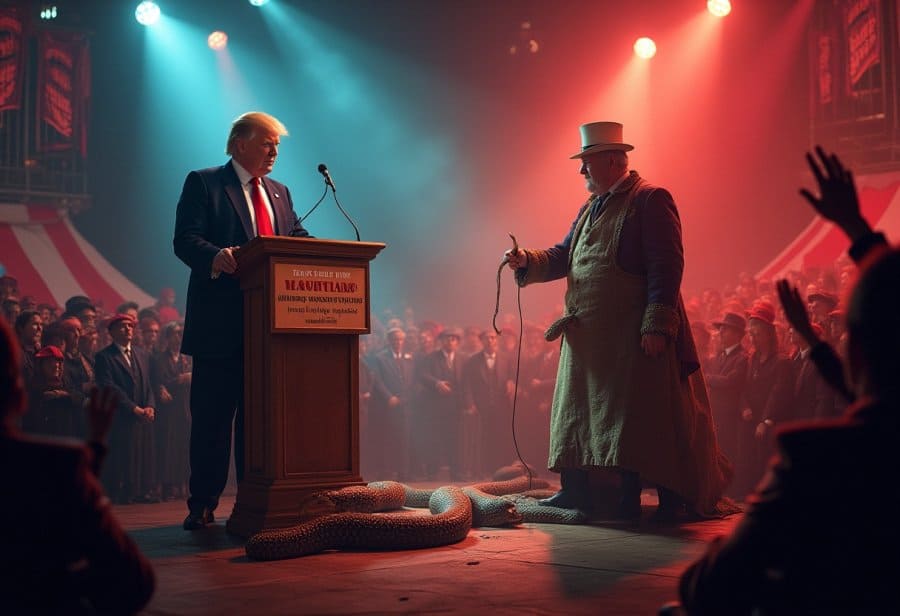
This pattern of favoring quick fixes over long-term solutions often leads to the rise of figures who capitalize on such sentiments. Observers sometimes refer to these leaders as the ‘Snake Oil Salesman of the Senate,‘ highlighting how their persuasive tactics can resemble those of a charlatan promising cures without scientific backing. Recognizing these tendencies helps us remain critical of simple solutions that may ultimately do more harm than good.
Modern Mavericks and Viral Spectacles: How Today’s Leaders Capture Attention
Charismatic figures today continue to wield significant influence, especially in the realm of politics, where spectacle and emotional appeal often overshadow detailed policy discussions. Donald Trump exemplifies this trend, transforming campaign rallies into performances packed with bold slogans, theatrical gestures, and larger-than-life persona. Phrases like “Make America Great Again” became rallying cries that stirred deep feelings of pride, anger, and hope. Supporters describe feeling part of something bigger—an experience amplified by visual flair and dramatic moments that dominate his events. Social media further fuels this dynamic, turning snippets of speeches into viral sensations that energize his base and keep the media captivated.
Trump’s success highlights how emotional engagement and visual spectacle can often take precedence over substantive debate. His rallies focus on stirring feelings rather than detailed policies, creating an environment where personality and showmanship become the main currency of influence. Platforms like Twitter and TikTok extend this effect, with short clips of rallies and speeches spreading rapidly, reinforcing the spectacle-driven nature of modern politics. This environment shows how charisma and entertainment can shape opinions just as powerfully as facts, making political persuasion more about emotional resonance than rational argument.
The appeal of this approach isn’t confined to America. Leaders across the globe, from Brazil’s Jair Bolsonaro to the Philippines’ Ferdinand Marcos Jr., employ similar tactics—vivid staging, fiery rhetoric, and storytelling that forge a personal connection with supporters. They often portray themselves as outsiders fighting against corrupt elites, using spectacle and authenticity to foster loyalty. Their ability to craft compelling personas—whether through bold fashion, fiery speeches, or social media presence—makes them seem relatable yet larger-than-life. This blend of authenticity and showmanship taps into a universal desire for heroes who promise quick fixes and shake up the status quo.
Modern campaigns borrow heavily from entertainment traditions, with advertising becoming high-energy productions designed to evoke strong emotions rapidly. Leaders who grasp this shift can energize their supporters and attract widespread attention, often prioritizing personality over detailed policy. Social media clips from rallies and speeches go viral, reinforcing the central role of spectacle in shaping public perception. Voters are increasingly exposed to emotionally charged content that favors charisma over nuance, making media literacy and critical thinking more essential than ever.
In navigating this landscape, it’s vital for citizens to develop skepticism and media literacy. Questioning the evidence behind promises, verifying facts, and seeking diverse perspectives can help cut through the noise. Recognizing that spectacle aims to evoke feelings rather than convey full truths empowers voters to resist manipulation. Building a more informed public requires fostering a culture that values nuanced understanding alongside emotional connection—ensuring that charisma doesn’t overshadow critical engagement and the integrity of democratic discourse.

The Double-Edged Sword of Charisma: Impacts on Democracy and Society
Charisma-driven populism has a profound effect on how democracies function and how societies evolve. Leaders who rely heavily on emotional appeal and spectacle can energize their base and stimulate political participation, especially among those who feel disconnected from traditional politics. Their simple, emotionally charged messages often resonate deeply, giving voice to frustrations and hopes that might otherwise go unheard. This can temporarily boost engagement and foster a sense of collective purpose, which is vital for a vibrant democracy.
However, the emphasis on personality over policy tends to sideline complex debates and detailed discussions. When leaders prioritize memorable slogans and dramatic gestures, the nuance and depth necessary for informed decision-making often get lost. Over time, this shift can weaken trust in institutions, as supporters may start to see facts, expert opinions, and institutional norms as secondary to the leader’s charisma. The result is a fragile democratic fabric, vulnerable to manipulation and erosion of accountability.
Populist leaders often frame issues in stark moral terms, creating us-versus-them narratives that deepen societal divisions. By casting opponents as enemies of the people or corrupt elites, they foster an environment where dialogue and compromise become increasingly difficult. This polarization fuels social fragmentation, undermining efforts to build consensus on shared challenges. When society becomes divided into hostile camps, the capacity for collective problem-solving diminishes, threatening social cohesion and resilience.
The promise of quick fixes, a hallmark of charisma-driven populism, encourages short-term thinking. Leaders focused on immediate emotional reactions may neglect long-term reforms or systemic solutions. When promises prove empty or unrealistic, disillusionment grows, yet the spectacle persists, trapping societies in cycles of hope and disappointment. This dynamic weakens the foundations of sustainable governance, making it harder to address complex issues like climate change, economic inequality, or social justice.
The reliance on storytelling and spectacle also distorts the role of facts and expertise. Leaders craft compelling narratives that appeal to feelings rather than evidence, often enabling misinformation and conspiracy theories to spread. This erosion of shared truths hampers civic deliberation and undermines democratic legitimacy. Citizens become more susceptible to manipulation, making it harder to maintain an informed electorate capable of critical engagement.
Societies affected by charisma-driven populism may experience increased social hostility, as leaders emphasize identity politics and divisive issues. While supporters feel validated and empowered, marginalized groups face heightened hostility and alienation. This environment hampers efforts to foster inclusivity and mutual understanding, vital components of a resilient democracy. Deep societal rifts threaten the stability needed for collective progress.
Balancing the energizing power of charismatic leadership with the need for critical engagement is essential. Promoting media literacy, encouraging diverse perspectives, and emphasizing the importance of facts help safeguard democratic integrity. Leaders and citizens alike must recognize the seductive appeal of spectacle and remain vigilant against its potential to distort reality. Strengthening civic education and promoting nuanced discourse can help ensure that democracy remains resilient, even as it grapples with the allure of showmanship.
In the end, charisma-driven populism offers both risks and opportunities. While it can invigorate participation and make politics more accessible, it also risks undermining the substance and stability of democratic institutions. Recognizing these dynamics allows societies to harness the positive aspects of emotional engagement while guarding against the erosion of critical thinking and accountability. A healthy democracy depends on finding the right balance—celebrating inspiring leadership without sacrificing the complexity and integrity that sustain it.